Layering System For Hiking: Why Cotton Kills And What To Wear Instead
Author:Alina
|
Released:February 18, 2026
The term cotton kills sound dramatic yet the search and rescue teams have a reason as to why they are using such a term. Improper clothing in the backcountry has also led to the death of many people due to hypothermia that would not have occurred had they been wearing appropriate clothes.
An adequate hiking layering system will have you comfortable in the changing weather and safe when the weather becomes hazardous. This is how to create yours.
Why Cotton Becomes Dangerous When Wet
Cotton is easy to get wet and retain moisture to your body. Cotton t-shirt has the capacity of absorbing 27 times its weight of water. Cotton becomes practically a non-insulator when it is wet due to either sweat or rain. The damp clothing then removes heat off your body 25 times as quick as dry clothes.
This loss of heat increases at a very high rate in wind. A damp cotton with even the slightest wind caused quick cooling, which your body will not be able to oppose by normal metabolism. According to the Wilderness Medical Society, majority of the cases of hypothermia are not extreme cold but rather in temperatures of 30-50 degrees Fahrenheit, due to the fact that the victims wore cotton, which got wet [1].
Cotton is very slow to dry as well. Even in warm weather it may take hours to dry a wet cotton shirt. Synthetic and wool substitutes are dry in a small part of that duration, frequently as you keep hiking. The more time you have the wet piece of cloth in touch with your skin, the more perilous the situation is.
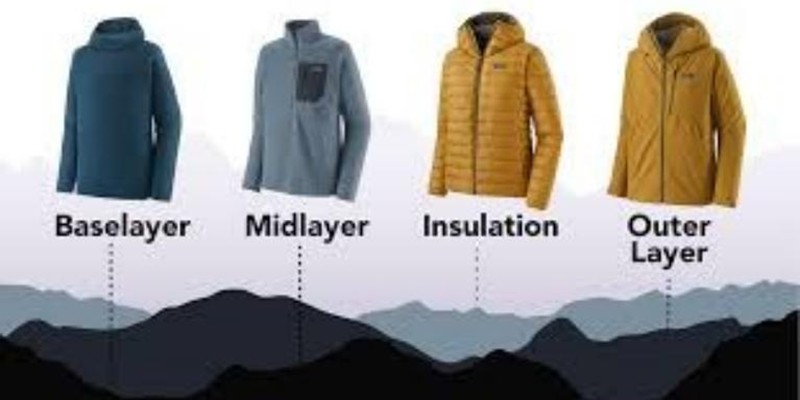
Base Layer: Your First Line Of Defense
The base layer is in contact with your skin and it controls moisture. Its work is to take the sweat off your body to external surfaces where it can evaporate. An appropriate base layer is dry even in the case of heavy activity. This is the only layer that is important in temperature control and safety.
Merino wool underscores are the most advantageous in terms of temperature and smell. The natural fiber has the ability to keep the moisture within its structure but still feel dry on the surface. Base layers are available in brands such as Smartwool, Icebreaker, and Minus33, in both ultralight summer and heavyweight winter.
Polyester or nylon wick synthetic base layers are both faster to wick and quicker to dry than wool. They are less expensive and can withstand frequent washing. Capilene and REI Co-op base layers are stable synthetics that are made of Patagonia. The trade-off is that synthetics form an odor more quickly and cannot control temperature as well as merino.
Mid Layer: Insulation That Breathes
The midd layer is insulating but still allows moisture to escape. This layer entraps warm air near your body but does not lock in sweat. You add and remove mid layers with change in activity level and temperature during your hike.
Fleece is the most popular mid layer material due to this reason. It is wet, quick-drying, breaths well during exercise, and is cheaper than down or synthetic insulation. Fleece in different weights is Polartec and is used in the cool mornings up to the real cold. Millions of hikers are served by the classic Patagonia Better Sweeater and North Face jackets of fleece.
Puffy jackets, both down and synthetic, are as warm as they can be, with a lower weight. Down has the highest warmth/weight ratio, but it does not insulate well when wet. Artificial insulation such as PrimaLoft helps to keep warm even when wet. REI suggests using synthetic insulated jackets in wet weather and down in dry cold conditions [2].
Outer Layer: Wind And Rain Protection
The outer layer cover protects you against wind, rain, and snow. This layer is also referred to as a shell and must be, waterproof or water-resistant and yet allow some vapor to evaporate. It has a totally waterproof surface, and it traps moisture in the layer, so your moisture-wicking base-layer is useless.
For more serious rain and snow conditions, hardshell jackets constructed with Gore-Tex or analogues are completely waterproofed. They are more expensive and less comfortable to breath in when exercising intensely. Soffshell jackets are a compromise in water resistance to allow greater breathability and stretch. Hikers often have both and make decisions depending on the circumstances.
Wind jackets are almost weightless, and they resist unexpectedly large quantities of cold. There are numerous conditions that a simple wind shell will cover that would otherwise be covered by heavier insulation. One of the least considered hiking clothing items according to the American Hiking Society is the wind protection [3].

How To Use Your Layering System
Begin hiking earlier than you reckon you ought. In minutes after motion, your body produces a lot of heat. Warm means sweating right away, and that is a loss to your moisture management plan. Start with a smaller number of layers and add more as necessary.
Layers before you become hot or cold. Putting on a layer once you have started shivering implies that you have lost a lot of body heat. By peeling off a layer once you start sweating, you are already wetting your clothes. Be ahead of times and modify in advance.
Add after you have vented. Unzip, push up sleeves, or take your hat off, and then take off whole layers. These minor modifications can usually offer sufficient temperature control without the inconvenience of adding and adding layers.
Build Your System Before You Need It
Bring cotton about town, and make a system of proper layering up the trail. Investment in quality base layers, flexible middle layers, and shells to protect you is also dividend in comfort on every hiking trip, and could also save your life when the weather goes bad.
Budget constrained, start with a good base layer. This one article contributes to the greatest difference in water control and thermal control. These should be added as middle and outer layers when you afford them, and you can prioritize them according to the usual hiking conditions and weather.
References
[1] Hypothermia Prevention and Recognition - Wilderness Medical Society - https://journals.sagepub.com/doi/10.1016/j.wem.2019.10.002
[2] How To Choose Insulated Jackets - REI Expert Advice https://www.rei.com/learn/expert-advice/insulated-outerwear.html
[3] Hiking Clothing Essentials - American Hiking Society - https://americanhiking.org/wp-content/uploads/2013/04/Hiking-Clothing-fact-sheet.pdf
Related Posts
Outdoor Gear
The Best Headlamps for Brightness, Comfort, and Battery Life
Outdoor Gear
Hiking Sock Materials Compared: Merino Wool Vs Synthetic Blends
Outdoor Gear
Gaiters For Hiking: When You Actually Need Them and How to Choose
Guides and Tips
Night Hiking Skills: How To Use Your Headlamp Without Losing Night Vision
Guides and Tips
Top Hiking GPS Devices for Navigation That Actually Work on Real Trails

Activities